

Woodland in Nursery: Nurturing Health, Wellbeing and Early Learning
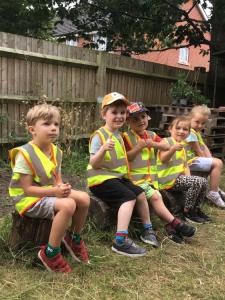
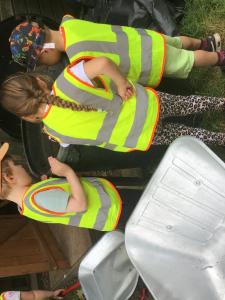
Woodland time is a fundamental part of our Nursery provision and plays a key role in supporting young children’s health, wellbeing, confidence, and all‑round development. The natural outdoor environment offers rich, hands‑on experiences that inspire curiosity, independence, and a lifelong love of learning key principles at the heart of Early Years education.
During Woodland time, children are encouraged to explore, play, and follow their own interests. Whether they are searching for mini‑beasts, collecting natural treasures, building simple dens, or enjoying sensory play in mud and leaves, children learn through authentic, meaningful experiences that promote both wellbeing and development.
Time spent outdoors provides a sense of calm and freedom, helping children feel grounded and emotionally secure. Nature encourages mindful moments, boosts mood, and supports children’s ability to regulate their emotions. Working together to explore the environment strengthens friendships, cooperation, and communication, helping children feel confident, capable, and connected.
These experiences closely support the EYFS Areas of Learning and Development, helping children grow across the Prime and Specific areas:
Personal, Social and Emotional Development (PSED)
Woodland time builds self‑confidence and resilience as children learn to manage risks safely, make choices, and solve problems. Working in groups promotes turn taking, sharing, teamwork, and the development of secure relationships.
Communication and Language (C&L)
Outdoor exploration naturally encourages rich language. Children talk about what they notice, describe textures and sounds, ask questions, share ideas, and engage in meaningful conversations with peers and adults.
Physical Development (PD)
Climbing, balancing, running, lifting, and moving across varied terrain strengthen gross motor skills. Handling natural materials, mark making outdoors, and beginner tool use support fine motor development and early control.
Understanding the World (UTW)
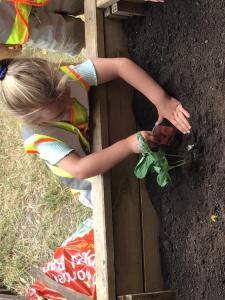
Woodland time fosters early scientific understanding as children observe wildlife, explore natural materials, notice seasonal changes, and begin to understand how to care for the environment and living things.
Expressive Arts and Design (EAD)
Nature inspires creativity. Children use sticks, leaves, stones, and mud for imaginative play, pattern making, storytelling, and simple artwork, boosting creativity and problem‑solving.
Literacy and Mathematics (through playful experiences)
Counting objects, comparing sizes, spotting shapes, following simple instructions, recognising symbols in nature, and making marks in mud or sand all support early reading, writing, and mathematical thinking.
| Document Title | View |
|---|---|
| Eco Code | ECO CODE.pdf512.29 KB |